SOFTWARE
LIQID Matrix® SoftwareLIQID as a Service
LIQID as a Servicepartner with LIQID
Partners
Browse our partner ecosystem and become a partner


*Based on initial testing using the same pooled-memory technology that powers Micron's Abaco reference design deployed at Pacific Northwest National Laboratory. Results vary by model and workload.
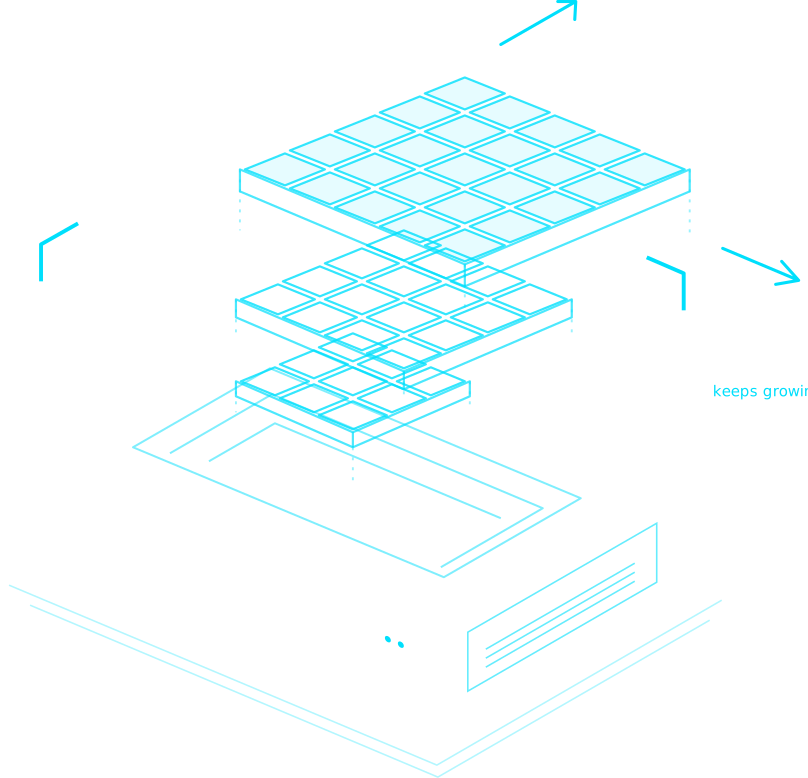
A typical AI server tops out at eight GPUs and a few terabytes of memory. Past that point, teams split work across servers, spill data to storage that is about 100 times slower, or let GPUs recompute work they already finished. Each workaround costs speed, and many teams buy extra GPUs just to get more memory.
Buying more GPUs that ultimately sit idle is the most expensive way over the memory wall.
Nodes start at 20 GPUs and 10 TB of CXL memory and scale to 30 GPUs and 160 TB. GPU options: NVIDIA H200 NVL, NVIDIA RTX PRO 6000 and AMD MI350P.
**Uptime Institute, 2026 Global Data Center Survey.
Tell us what you’re running and where it hits limits. A LIQID specialist will follow up within one business day to talk through sizing, pilot options and timing.
No. Every deployment is single tenant. You get a whole or half rack, and the security boundary sits at your network edge.
LIQID handles setup, validation, hardware maintenance and fault monitoring. You run your models and your stack.
NVIDIA H200 NVL, NVIDIA RTX PRO 6000 and AMD MI350P.
LIQID operates the infrastructure in existing datacenters, colocation sites, and neocloud, and service provider edge environments.
General availability is planned for Q1 2027.
See how much more your GPUs can do with rack-scale memory on one dedicated server, fully managed by LIQID.
Talk to sales